

Natural Intelligence
The Passion of Passionflower

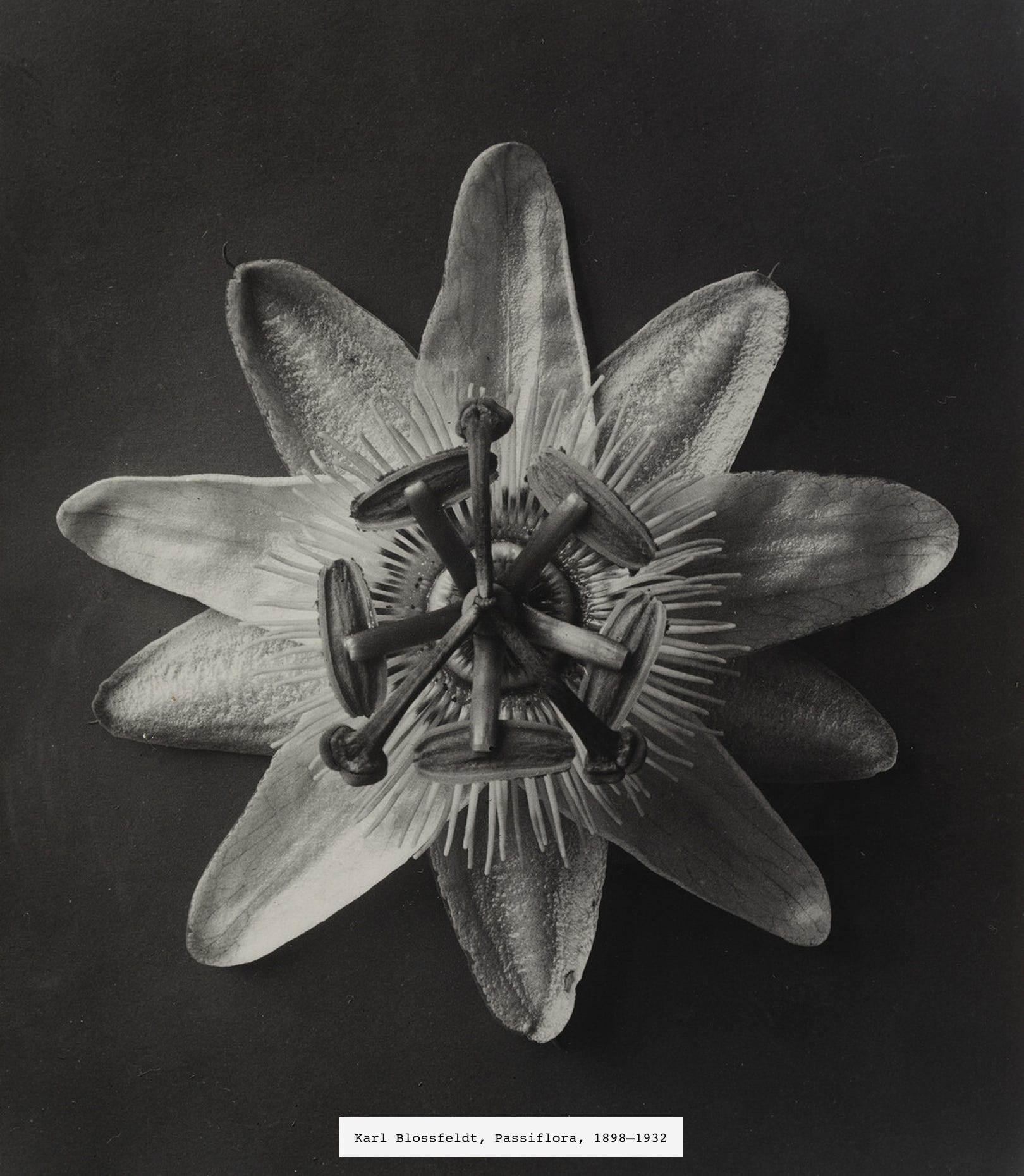
Computer scientist Alan Perlis once said, “A year spent in artificial intelligence is enough to make one believe in God.” If you’re actually looking for enlightenment, I’d suggest you start somewhere far less digital.
At Flamingo, the first thing you see is a Passionflower (Passiflora). We planted it above the entry gate so it twists overhead when you arrive and when you leave — a small reminder that this place belongs to another kind of thinking. Here, “natural intelligence” is the thing that saves us.
When 16th-century Spanish missionaries first saw the Passionflower in South America around 1553, they didn’t reach for technology either; they reached for God. They read the flower like a vision: five petals and five sepals for the ten faithful apostles (subtracting Judas and Peter), three stigmas for the nails of the Crucifixion, the tendrils as whips, the wild halo of filaments as the crown of thorns. The blossom became a tiny theater of suffering and redemption, and they gave it the name we still use — Passionflower, from the “Passion of Christ.” For them, this was proof. A plant had spelled out the entire Gospel in petals. Case closed.
